

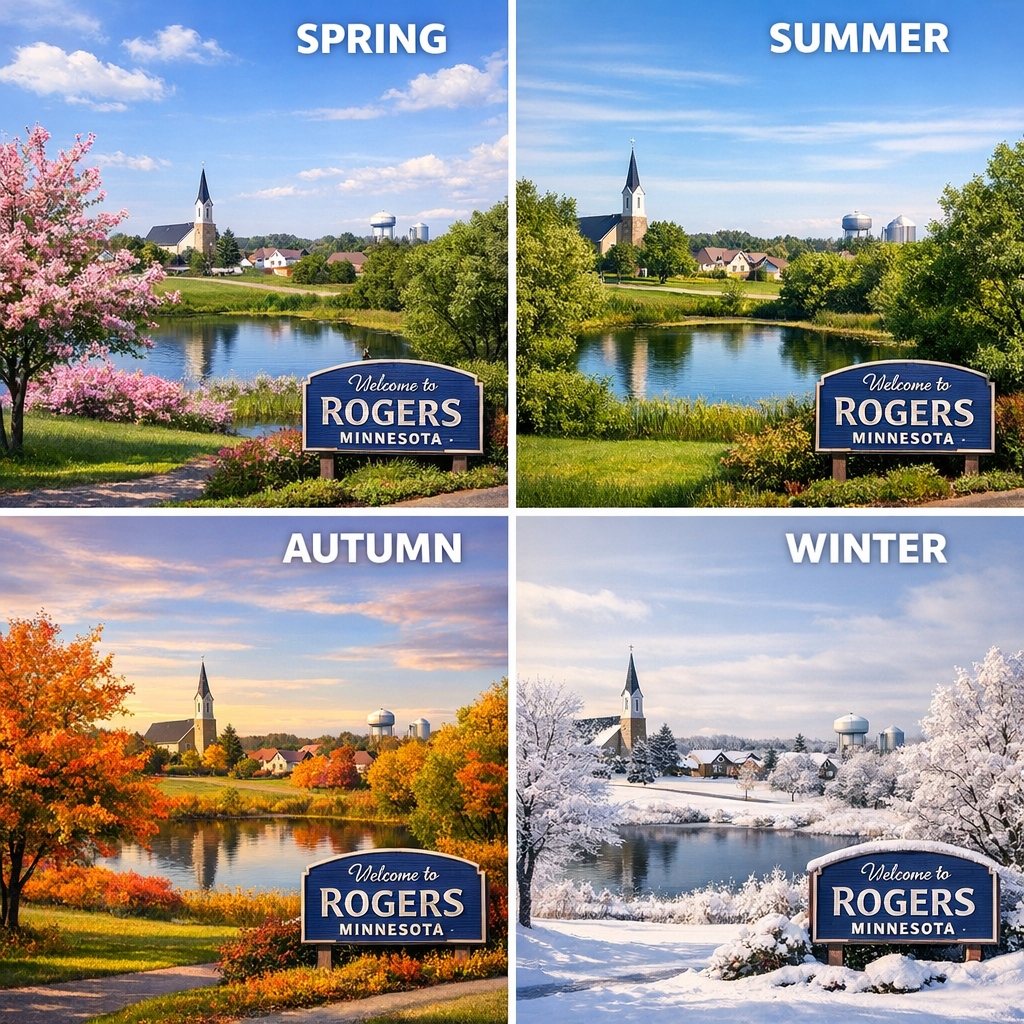
Rogers, Minnesota, experiences a diverse range of weather conditions throughout the year, characteristic of a humid continental climate. Understanding these patterns can help residents and visitors prepare for seasonal changes and appreciate the natural environment of our community.
Seasonal Temperature Variations
The warm season in Rogers typically spans from late May to mid-September, with average daily high temperatures exceeding 70°F. July stands out as the warmest month, boasting average highs around 82°F and lows near 63°F. Conversely, the cold season extends from late November to early March, during which average daily high temperatures fall below 35°F. January is the coldest month, with average lows around 6°F and highs near 24°F.
Precipitation and Snowfall
Precipitation in Rogers is fairly evenly distributed throughout the year, with an annual average of approximately 32.35 inches. June tends to be the wettest month, averaging around 4.65 inches of rainfall. Snowfall is a significant aspect of the winter months, contributing to the region’s snowy landscape.
Environmental Considerations
Rogers’ climate influences various environmental factors, including water resources and local ecosystems. The city’s water supply is sourced from five wells drawing from the Franconia-Ironton-Galesville Aquifers. Residents should be aware that the water hardness level is notably high, averaging 20-22 grains per gallon, which is nearly four times the national average. This hardness can affect household appliances and plumbing systems.
Additionally, the city has implemented watering restrictions from May 1st to September 30th to manage water usage during the warmer months. These restrictions apply to all city water customers and are essential for conserving water resources.
Conclusion
By understanding the seasonal weather patterns and environmental factors in Rogers, residents can better prepare for the year’s climatic variations and contribute to the sustainability of our community’s natural resources.