

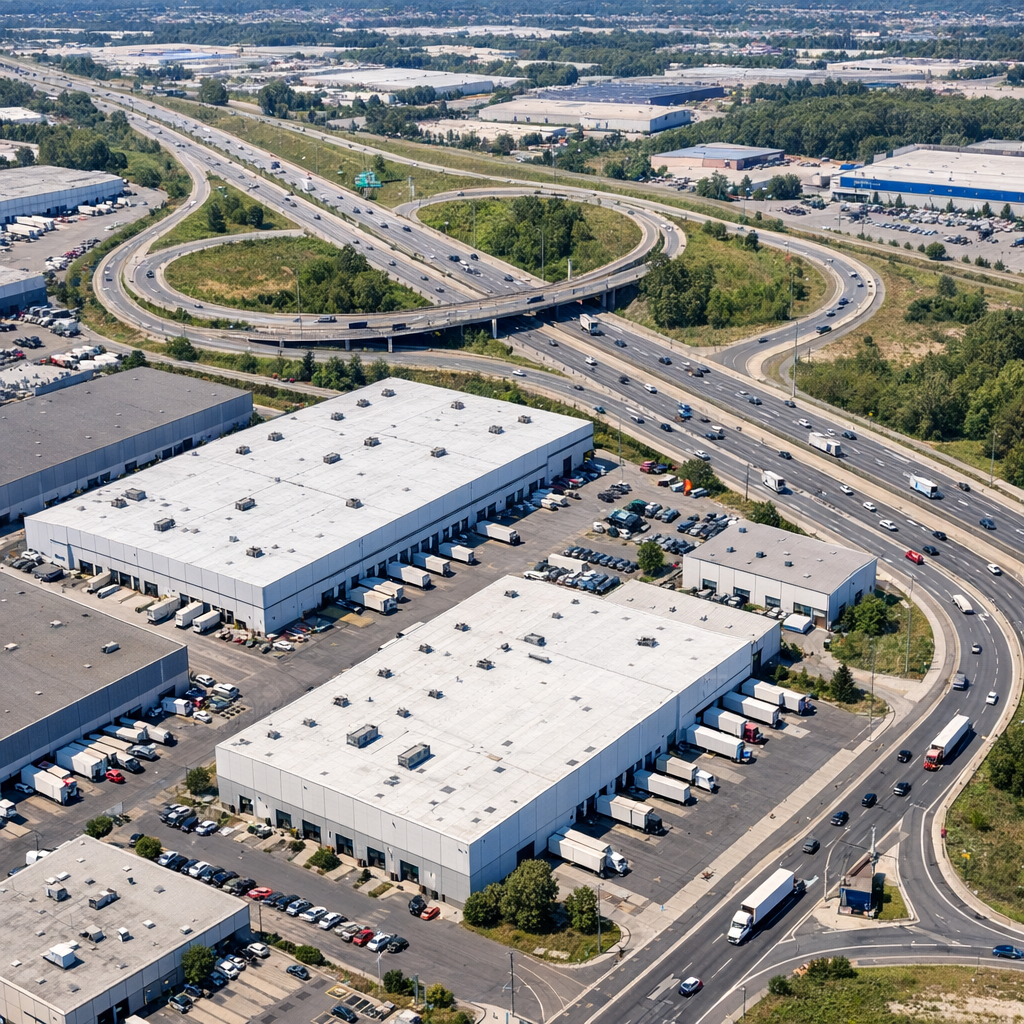
As Rogers continues to grow, industrial development is becoming a significant force driving the city’s business landscape. From new industrial parks to redevelopment efforts, these trends are fueling jobs, commercial activity, and long-term economic potential.
Strategic industrial projects underway
Earlier this year, the Rogers 101 Business Park broke ground on two speculative industrial buildings totaling 442,000 square feet—one of the largest such developments in recent memory. Its design is meant to meet growing demand in warehousing, manufacturing, and distribution.
Similarly, the Rogers Gateway project, a 117,000-square-foot speculative industrial facility along Interstate 94, is under construction and expected to offer flexible layouts for tenants of various sizes. Both projects aim to attract business investment and grow employment.
Local economy by the numbers
The city’s employment base sits at over 11,000 jobs, with projections pointing toward more growth as Rogers positions itself as a regional distribution hub by virtue of its access to major highways.
Industries employing the most people among residents include health care & social assistance, manufacturing, and educational services. Meanwhile, some of the highest-paying sectors are finance & insurance and professional, scientific & technical services.
Change in commercial and service sectors
Alongside industrial development, consumer-facing businesses are keeping pace. Rogers now hosts a growing restaurant corridor near South Diamond Lake Road, featuring fast-casual and full-service concepts like Crisp & Green and Dave’s Hot Chicken. These reflect shifts both in consumer preferences and in land use patterns, as commercial activity clusters around major traffic arteries rather than traditional downtown areas.
Challenges and opportunities ahead
With expansion comes key considerations. Rogers must ensure that housing development keeps up with job growth so that workers can live locally. Maintaining affordability in both housing and commercial rents will play a big role in long-term economic health. Developers also face pressure to build modern infrastructure and flexible space to match evolving industrial tenant needs.
For those thinking of starting or expanding a business in Rogers, the signals are strong: the city is investing in industrial capacity, and there is space for entities that can serve both local consumers and regional supply chains. Success will hinge on navigating permits, understanding traffic and transportation routes, and aligning with where the community is headed economically.