

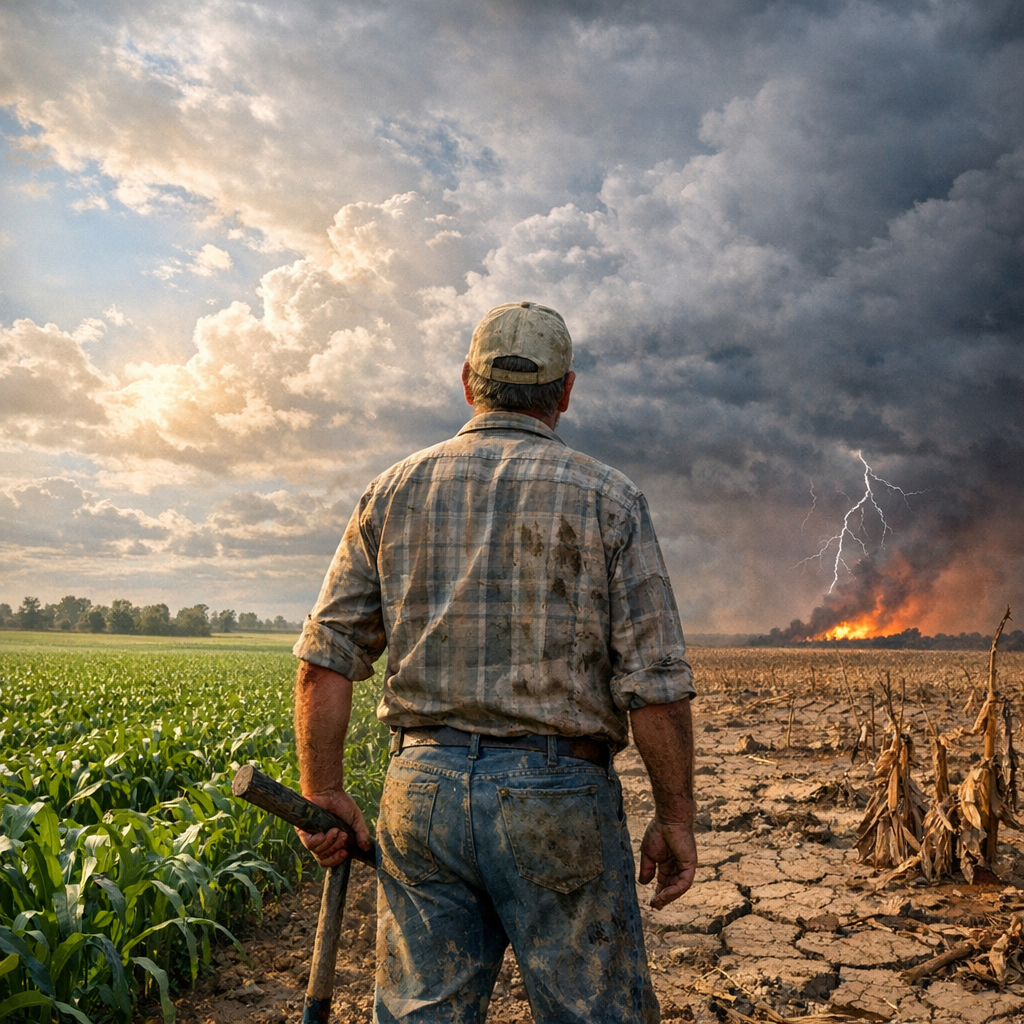
As global economic dynamics evolve and climate change accelerates, the agricultural sector faces significant challenges. Understanding these trends is crucial for communities like Rogers, Minnesota, where agriculture plays a vital role.
Global Economic Outlook
Recent analyses indicate a moderation in global economic growth. The International Monetary Fund (IMF) projects global growth to slow to 3.1% in 2026, influenced by factors such as geopolitical tensions and energy market disruptions. Similarly, the United Nations Conference on Trade and Development (UNCTAD) forecasts a slowdown to 2.7% in 2026, citing trade tensions and fiscal strains.
In the United States, consumer spending and investments in artificial intelligence are expected to drive moderate growth. However, rising government borrowing costs, now at 22-year highs, could pose challenges for economic expansion.
Climate Change and Agriculture
Climate change is exerting profound effects on agriculture. A study published in Live Science reveals that global warming is accelerating approximately 5,000 times faster than rice can naturally evolve, threatening the sustainability of this staple crop. This rapid change surpasses the adaptive capacity of many crops, including those grown in Minnesota.
Research indicates that anthropogenic climate change has reduced global agricultural total factor productivity by about 21% since 1961, equivalent to losing the last nine years of productivity growth. This impact is more severe in warmer regions but has implications for all agricultural areas.
Local Implications
For Rogers and surrounding communities, these global trends translate into tangible challenges. Farmers may face increased costs due to higher interest rates and potential disruptions in supply chains. Additionally, changing climate patterns could affect crop yields and necessitate adaptations in farming practices.
Staying informed about these developments is essential for local farmers and stakeholders. Proactive measures, such as investing in climate-resilient crops and exploring sustainable farming techniques, can help mitigate some of these challenges.
By understanding the intersection of global economic trends and climate change, communities can better prepare for the future and ensure the sustainability of their agricultural practices.